

Shields Up, Stupid.
Why some wizards don't know how to FlapDoodle.

1.
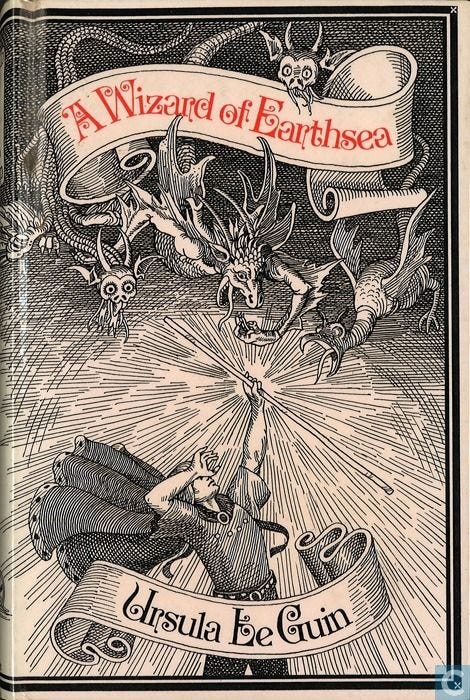
In the second chapter of Ursula K. Le Guin’s A Wizard Of Earthsea (1968), the aspiring wizard of the book title is having a really bad day:
“Ged had thought that as the prentice of a great mage he would enter at once into the mystery and mastery of power. He would understand the language of the beasts, and the speech of the leaves of the forest, he thought, and sway the winds with his word, and learn to change himself into any shape he wished. Maybe he and his master [Ogion] would run together as stags, or fly to Re Albi over the mountain on the wings of eagles.
"But it was not so at all.”
To Ged’s immense frustration, all they were doing was meandering - in no hurry to get anywhere, and with no apparent destination in mind. No spells were being cast. No dastardly enemies thwarted, no epic quests afoot. Just silence and endless hillsides in all directions. What the hell were they doing? What the hell was Ged learning?
Then it started to rain.
In Ged’s experience, rain is the simplest of problems to solve - you enlist the help of a weatherworker, among the commonest of magic users, and you convince them (perhaps with money) to bat the clouds away, as befits such nuisances.
But oh no, not his master!
“…Ogion let the rain fall where it would. He found a thick fir-tree and lay beneath it. Ged crouched among the dripping bushes wet and sullen, and wondered what was the good of having power if you were too wise to use it, and wished he had gone as prentice to that old weatherworker of the Vale, where at least he would have slept dry. He did not speak any of his thoughts aloud. He said not a word. His master smiled, and fell asleep in the rain.”
2.
Today’s newsletter is about AI, and I can’t quite believe I’m writing it.
You may not either. Have I ever given any sign of knowing the least thing about LLMs like ChatGPT or Claude or Grok or Gemini or FlapDoodle (yes, I made that one up)?
Nope.
Do I use AI tools for any part of writing this newsletter?
I do not.
Consequently, when I read about AI, it’s exactly this meaningless to my brain:
(That Note is satirical, by the way - just in case you’re at my level of cluelessness & need that pointing out.)
Yet there’s also no avoiding it, if you spend any amount of time online. LLM tools are now creeping into everything, often so intrusively that many of us are playing whack-a-mole to switch the damn things off again.
I recently subscribed to the author of a book I loved, and his latest essay was all about AI - not an amiable mosey around the basics, but a thunderous tirade against left-wing AI naysayers:
“Sometimes I want to shake people: have you actually used it?! Many skeptics seem to have opened ChatGPT in 2023, asked it to write a limerick, watched it fumble, and closed the tab. Well, that was three years ago. Three years in AI is a geological era. Judging today’s models by GPT-3.5 is like judging smartphones by a 2007 BlackBerry.”
I think his eventual conclusions sound sensible enough - funnel more people into AI safety positions in governments across the world, encourage more international collaboration around this, and try to divert some of these vast amounts of money and power away from big-tech companies and towards people who seem to like, you know, people.
But the “wake up, sheeple!” tone he takes to get there…ye gods.
To be clear, I do find it difficult to argue with anything he says - not because I think it’s particularly right or wrong, but because I currently know far too little to judge it either way, and reading something this zealous does nothing to whet my curiosity.
Since reading it gave me a mild headache, I initially figured I’m out. Let me return to my own version of standing in the rain and wondering what the hell everything means. That’s the fir-tree I choose to huddle under.
Or, at least I thought I was out. But as you can see, here we are.
It seems I do have a few things to say - and if you’re as bone-weary about this whole topic as I am, I hope you’ll bear with me, because it gets to the heart of the kind of newsletter I want to write for you.

3.
When I first read about Ged’s suffering in the rain in my early teens, the injustice of it infuriated me.
Yes! Isn’t that the whole point of having power - so you can use it to do good in the world? Or, at least try to? What if Ged or Ogion caught pneumonia and died - what good would that do? What’s the point of pointless suffering?
Or - okay, fine. Keep your damn clouds then. But what about making, I dunno, a magical umbrella or something?
(Forty years later in our so-called real world, I’m still surprised these haven’t caught on, at least for hill walkers.)
My point here is that Ogion - and I guess Le Guin, too! - seems to be sidestepping the obvious: if you can do something, isn’t it actually immoral to not do it? Isn’t that what being a good human is all about - to accumulate enough power to yourself to be an active force in the world for the greater good?
In fact, isn’t that a good argument for becoming a hero?

4.
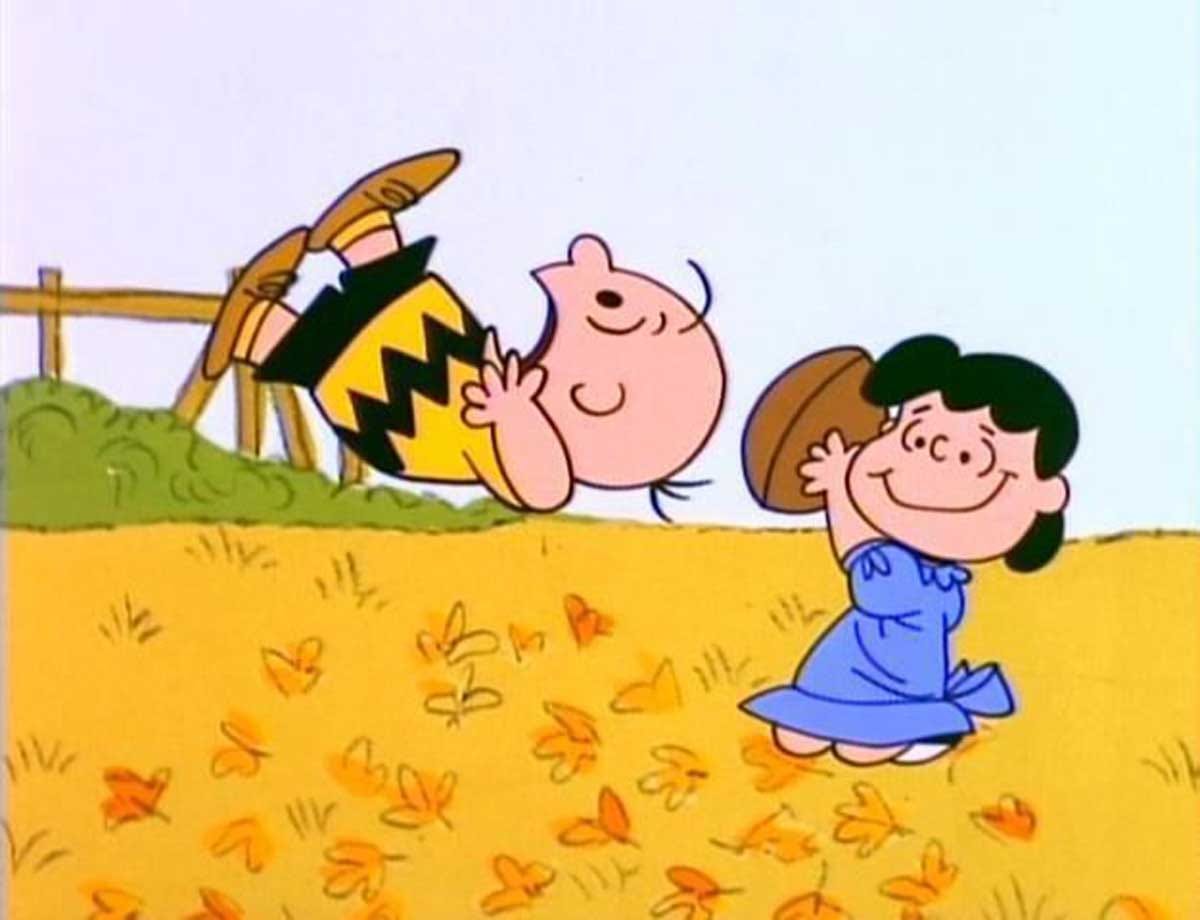
“Do you know what the definition of a hero is? Someone who gets other people killed. You can look it up later.”
- Zoë Alleyne Washburne, Serenity (Joss Whedon, 2005).
5.
Is AI putting people out of work?
Yes, of course it is! And no, it’s definitely not!
Both of these are presented as self-evidently true by writers I’ve read recently - people whose voices I continue to respect and trust. It’s all a bit maddening really.
For that reason, I wouldn’t know where to start with answering that question - although Amazon laying off 16,000 employees probably says something, and Twitter co-founder Jack Dorsey slashing the workforce of his latest company because AI "fundamentally changes what it means to build and run a company" is probably shrieking the same thing.
In a sense, this is nothing new. Companies fanatically beholden to their bottom line axing the jobs of long-standing employees - well, AI certainly hasn’t invented that. It’s just the latest excuse to betray the people you hired (there, I said it).
I know I’m naive in thinking a primary role of any company should be to support and nurture the human talent within it. I’m absolutely fine dying on this hill. At least the view is nicer up here.
But one recent case study that doesn’t get talked about enough is what happened to independent blogs when Google moved towards AI.
As my friend Rand recently wrote:
“For 25 years, Google told websites to “just make great content,” and they’d sort out the rest. This advice was incomplete, problematic, and reductive, but also… sorta true. If you made 10X Content in 1997, 2007, or 2017, it often worked (at least, so long as you *marketed* that 10X content).
But, no more.”
With algo update after algo update, Google Search sent less and less traffic to independent websites & to the writers who had invested their entire careers in them. By 2020, many friends in & around travel writing, who were hitherto making a decent (or at least increasingly hopeful) living from work they loved were suddenly teetering at the edge of not even covering rent.
Then the pandemic struck - and it wiped some of them out completely.
And then, in 2024, Google’s AI Overviews arrived.
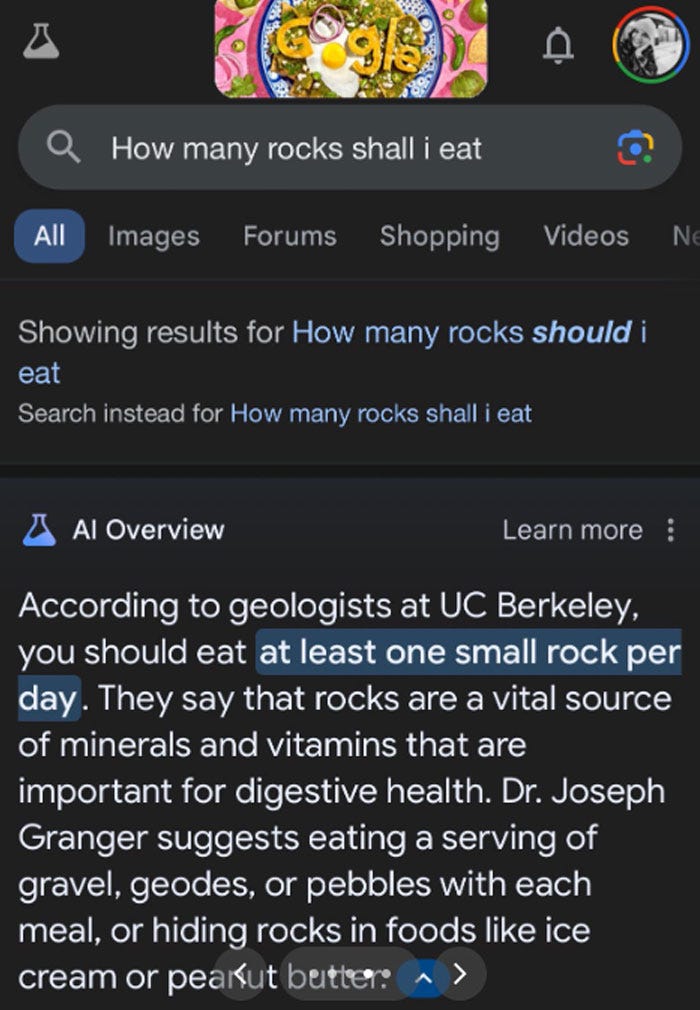
Most AI summaries aren’t like this, of course. They’re workmanlike enough that they’ll answer your query in a bland but sane manner, with only a fairly small chance of them hallucinating up an answer that lands you in an E.R. What more could you ask?
Only - nobody clicks the links. Why would they? AI just answered your question for you, didn’t it? Job done!
As Rand notes: “In the first four months of 2026, a whopping 68.01% of Google searches ended without a click.”
But where did AI Overviews get all these search answers? From those still-existing websites, of course! Overviews may include links back to them, but it’ll now be crystal-clear to folk at Google that most of nobody is clicking them. They surely must see this happening. They’re not daft.
Well, neither are we - all us small-fish writers (and now much bigger publications) who put the information onto the Web in the first place that Google and every other AI company has scraped and rehashed for their own purposes. We see this for what it is: theft. Not of the facts themselves - we hold no copyright on reality - but of our own unique interpretations of them, banished by Google Search into the realm of dust-gathering citations nobody will ever bother reading.
This has murdered the business of some of my friends. Many are better writers than I’ll ever be, and now they might never get the chance to find that out (although I really hope they’ll try).
I will never get over this. It’s so unthinkingly cruel, and so heartless - and so monstrously wrong.
It’s also what AI will allow the worst of the other companies to do to even more people! No ethical standards they’ll all agree upon, no internal checks on the power they’re abusing.
Again, this is nothing new - but it probably means we have to decide where we draw the line.
So hey, how’s that going?

Last year I got chatting to someone on Threads (Meta’s version of Twitter). I’d just asked a question about how everyone felt about OpenAI’s new “Studio Ghibli AI filter,” which can turn photographs into clever but usually fairly lifeless facsimiles of characters from Spirited Away and the like - and the guy replying to me was beyond delighted about it!
Paraphrasing:
Him: My job is making great artwork for other people’s websites, and I love love LOVE Hayao Miyazaki’s work - in fact, he inspired me to become a digital artist in the first place. Utterly thrilled I can use this!
Me: But - you know how Miyazaki feels about generative AI?
Him: Nope! How does he feel?
Him: Huh. Well - that’s dumb of him.
Me: Dumb?
Him: Yeah, I’m surprised. This is the future, and he’s going to get left behind. I hate he thinks that way - but no, it’s certainly not going to stop me using this filter. I’d love him to get on board, but I’m not interested if he doesn’t. That’s his loss. I’m still a fan of his work though. It changes nothing.
He’s still a fan of his work though.
I have lots of friends and acquaintances using AI tools right now, and some using generative AI for work purposes. I hope nothing in this newsletter makes them feel attacked or ridiculed, and I hope they don’t conclude I’m actually a smug, self-righteous arsemonger. But they might. That’s part of the reason I haven’t wanted to write about AI before now, because - who the hell am I to be throwing my opinions at others, considering my vast ignorance on this subject?
But I can’t get past this, or what Google did. Based on recent events, we probably should form an opinion, even the smooth-brained idiots like me. Not necessarily about what other people should be doing, but what we’re going to do.
Many of the companies aggressively pushing AI on us are acting like they don’t consider the ethical side of things to be in their wheelhouse. Maybe they do and I’m dead wrong, but I don’t see it.
In that case, they might (shamelessly) say to us that their tech itself is completely neutral, and therefore any ethical concerns are irrelevant at their end - ah, that old chestnut again - and how we decide to use it, as case-by-case individuals, makes it our moral responsibility.
This is why getting more AI Safety people into government is needed, as Rutger Bregman suggests. It really shouldn’t be entirely our call.
But if in practice it is (however temporarily 🤞), we’d better decide as individuals where our own lines should be drawn.
6.
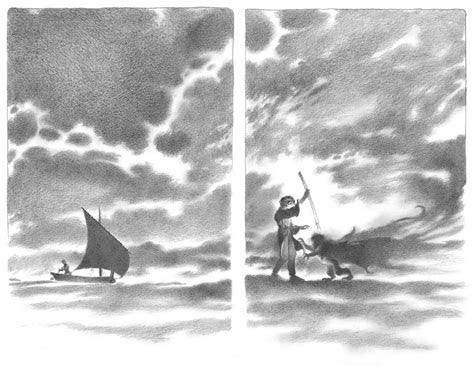
Sometime in my thirties, I re-read A Wizard Of Earthsea for the fifth or sixth time, and Ged’s struggle in the rain landed very differently with me.
Oh, stop whining, you young fool. Can’t you see he’s trying to teach you patience? Must you always run before you can walk? Doesn’t great power come with at least some bloody responsibility, and all that? Can’t you see how being a hero gets other people killed, like in that film I saw the other day?
Ged was clearly an idiot, and he therefore deserved everything coming to him in the rest of the book. No doubt about it!
Realising this made me feel very smart indeed.
7.
The other day I used the AI chatbot on my bank’s app, for what financial services would call a “non-standard query”.
It wasn’t really that complicated an ask, but it was the kind of thing you need a real person for, because they’d understand what it’s like to be asking a chat-bot the same damn question in a dozen differently-worded ways for 45 minutes because it just couldn’t seem to understand what I was asking it to do.
This kind of AI is very smart but also extremely stupid. You wouldn’t realise it from reading the most bug-eyed pro-AI screeds - but I guess that’s the nature of anything screeds? Down with the hot takes, & up with the ones you’ve popped in the fridge for a week.
The best thing I’ve read on this is from Adam Mastroianni, who defines AI intelligence as follows:
“Some problems have clear boundaries and verifiable solutions, like “What’s the cube root of 38,126?”. These problems require objective intelligence. Other problems are vague and squishy and it’s not clear whether you’ve solved them, or whether they exist at all, like “How do I live a good life?”. These problems require subjective intelligence. Objective intelligence can be trained, reinforced, and validated. Subjective intelligence cannot.
It’s unfortunate that people use one word to refer to both of these capabilities, when in fact they have nothing to do with each other. It is also, ironically, a case of objective intelligence overshadowing subjective intelligence: these skills are obviously and intuitively different, but a century of psychological research has “proven” that only one of them exists.”
This is really about the stupendously slippery concept of wisdom (which Adam makes explicit with a Montaigne quote at the end).
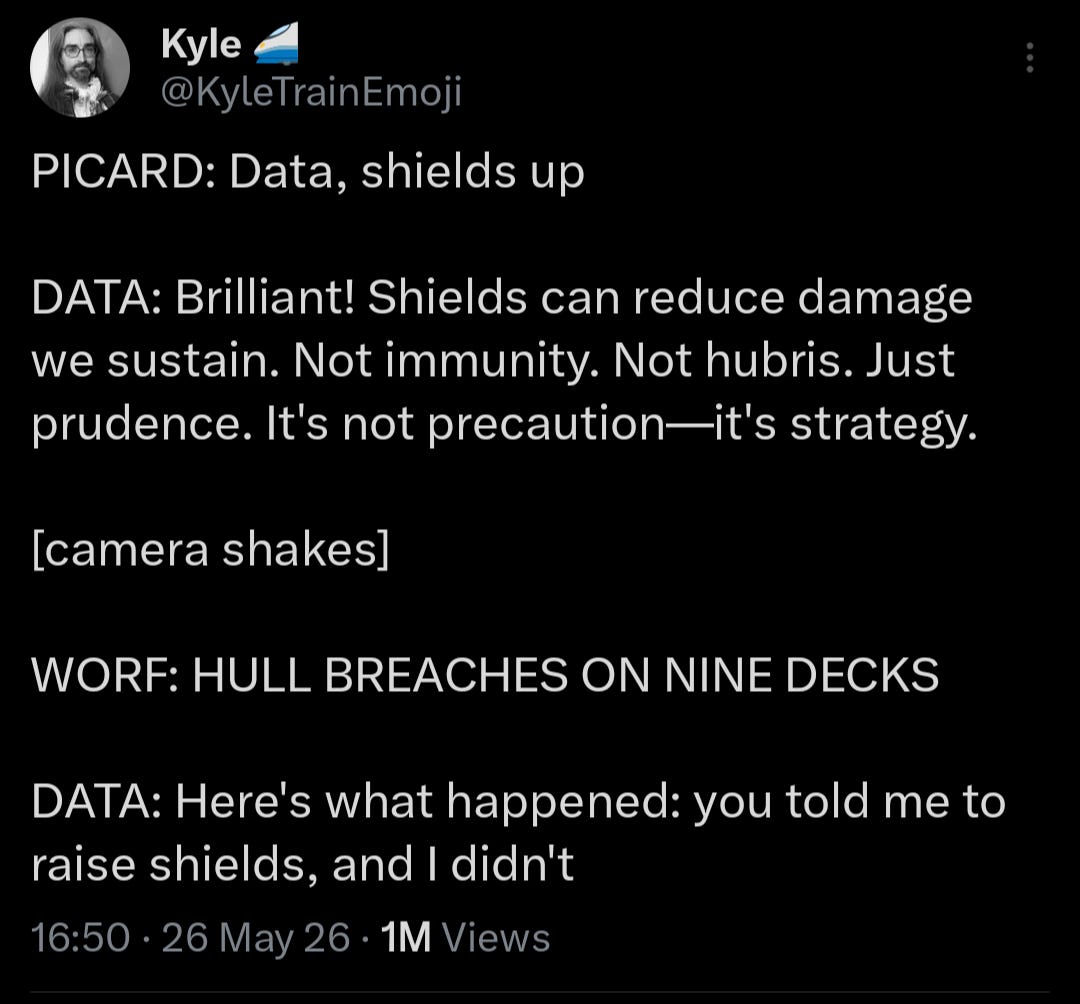
LLMs aren’t at all wise, at least right now - partly because wisdom sometimes requires an embodied understanding of the stomach-knotting, butt-clenching impact of being wrong, as Kyle’s tweet parodies so well. There’s no weight behind an LLM’s mistakes. When it says “sorry,” it's not frantically riffling through its back-catalogue of remembered experiences for a response that would make it, the idiot who just ruined everything, feel and look less awful. That would require it to care - and it can’t, no matter how well it fakes it, because it literally has no skin in the game.
I honestly can’t think of a worse quality to have in a service that manages your financial wellbeing. But hey, here we are!
However much that AIs continue to perform more and more impressive feats of objective intelligence for the good of individuals/humanity/profits/some terrifying Other, it’ll probably remain as subjectively unwise as ever, in a whole bunch of ways that will matter deeply to us humans when we encounter them.
What we need is the kind of wisdom being demonstrated by Adam Sandler’s Italian tour operator in this SNL sketch:
Another side of things that AI-assisted creators should be worried about: from some polls, it seems a lot of consumers really, really hate AI-generated stuff.
This may be an open question in the long run as tastes adapt, but what if it is generally true and remains generally true? What do you do then - hide the fact you use AI, and gamble your career on not being found out, because the fallout from that would be so ruinous for you? (Case in point!)
It also baffles me on another level - the level where I know my own skills as a writer fall vastly short of all my writing idols (for example, Ursula K. Le Guin). Aren’t I doing all this to get better at it, so I can acquire some measure of the ability to do it even with the most basic tools to hand? Isn’t that the majority of the point of doing it - even if I’m also trying to make a living here?
(Katherine May summed up my thoughts in a newsletter the other day: “Writing is a hard thing to do well, but it still astonishes me that so many people have thrown in the towel so quickly.” I can’t avoid concluding that some writers don’t actually want to write - they only want to have written, for all the fickle rewards that might unlock for them.)
Me, I’m with Adam when he says “I would rather die than let a computer write my posts.”
However, unlike Adam I don’t understand all this stuff terribly well, and most of these conclusions originate in my gut. It just feels wrong. That’s probably worth interrogating in my own time.
This is why I’ll continue reading wise and balanced voices like Jasmine Sun, to get a better (and determinedly hopeful) view of what’s going on. That’s my own way forward here.

8.
A few years ago, in going through the entire 6-book Earthsea cycle (including my first reading of its final two books), I once again encountered Ged and Ogion under their fallen tree in the rain.
I’d now had over 40 years to think about this. Okay, crunch time. Who was in the right here?
My current thoughts are:
Of course, Ogion’s respect for the balance of the natural world is a good frame for the rest of the story and the world of Earthsea as a whole, and Ged’s youthful hastiness fits perfectly with A Wizard Of Earthsea being a cautionary tale.
But hey - was Ogion really being wise? Look: Ged’s a kid. Doesn’t Ogion remember what that was like? All that fire and rebellion and self-assuredness of one’s own invincibility? Can’t he see how staying silent and doing nothing is only going to stoke those things to melting point and drive Ged away?
Or, wait - does he sorta-kinda want Ged to go away and get into the kind of trouble that might get him killed, “for his own good”? Is Ogion - and I shudder to consider this - actually an asshole, deep down? Or is he just a great wizard but a bad teacher and poor judge of human character, with none of the emotional smarts required for steering an unruly teen in the right direction?
But what if they’re actually both right - and that’s both the message and the richly human tragedy of it?
I’d love to ask Le Guin herself, but that time is long passed - and hey, maybe she wouldn’t quite know either. The entire Earthsea cycle took her 33 years to write - and as magnificently coherent as it is, it also reads to me like someone thinking through their big themes as they go, which Le Guin herself confirmed here:
“What I’d been doing as a writer was being a woman pretending to think like a man … I had to rethink my entire approach to writing fiction … it was important to think about privilege and power and domination, in terms of gender, which was something science fiction and fantasy had not done… All I changed is the point of view. All of a sudden we are seeing Earthsea … from the point of view of the powerless.”
Isn’t that one of the joys of reading someone’s work, to have the immense privilege of going on that journey of discovery with them, in that illusory “real-time” that good storytelling creates?
An AI summary, on the other hand - well, it’ll summarise. It’ll collapse the boundless wave-function of all that time-won knowledge and experience down into one deafeningly hard answer - with all the self-assured confidence of someone (some-thing) knowing that if they’re wrong, hey, they can just apologise for it later, no harm done!
This will also happen instantly: THUD. Behold the answer! With our help, you’ll never have to sit with the actual question at all. Oh, how efficient that’ll make everything. Information gaps? Pah, who needs ‘em? The thrill of discovery? Yawn, life’s too short, let’s optimise that shit away. What do you mean you’re “undecided”? Can’t you read?
(An AI Overview will also never reply with, “Sorry! No idea really - philosophers have been chewing that one over for at least 2,000 years. Any answer I give would be reductive, misleading and painfully dumb in a way I’m incapable of recognising [see: Mastroianni, 2026], so your best bet is just to go out and try a bunch of stuff for yourself. Best of luck!”)
Anyway, as you may have already gathered, I find a lot of AI discussion tremendously un-fun - and it’s also happening whether I like it or not. So if you don’t mind, I’ll just raise my own shields and get back to writing in the way I’ve done for the last 5 years, about all the sciencey things that recently made me go wow - at least until a better idea comes along.
Hope that’s okay with you?
Thanks for reading,
Mike
"I’m absolutely fine dying on this hill. At least the view is nicer up here." Going to add this to my lexicon of responses when asked about my aversion to AI. *clap*
Probably the best thing I've read on this godforsaken subject so far aside from Brandon Sanderson's excellent short talk "We Are the Art" (which did a great job articulating my own feelings about it: https://www.youtube.com/watch?v=mb3uK-_QkOo&t=99s).
Et tu, Rutger Bregman?! I would have expected someone like him to come from the angle of "we need to reckon up all the costs and damages of this, who benefits and who loses" before telling anyone how they "should" feel about it.
I don't think I'll ever get over the theft either. Truly. I am, reasonably or not, perpetually upset with everyone who shrugs off the theft and privatization-for-profit of the entirety of humanity's thought and creativity.
I think I'm going to go rewatch Firefly now! Beautiful piece, Mike. I really like the structuring around "Earthsea."