

This Is Your Body If It Overheats.
A quick reminder, as Europe bakes this week.

Hello! This is Everything Is Amazing, a newsletter about science, wonder and, amongst other absurdities, unexpectedly undiscovered islands.
Today’s edition is a quick but important one, and it’s particularly aimed at folk in my corner of the world.
I certainly don’t have to check this magnificent ‘weather station’ at the edge of my local golf course to know it’s really, really warm in Scotland right now:

Alas, as I write this, a thoroughly alarming and absolutely brutal heat dome is descending upon central Europe…

…with temperatures in some places set to reach 44°C (111.2°F) by the middle of the week. Even the relatively chilly UK is getting a kicking, especially in southern England.
Because of this, I’m sneaking this extra edition in before the newsletter I originally planned to send you. It’s a re-run of a piece I sent out in 2024, and the final part of a trilogy of unsettling articles I wrote when I was a travel writer.
(The first and second, on what happens to your body when it gets too cold or when you don’t sleep for days on end, are here and here.)
If you’re skimming this newsletter and looking for a one-sentence takeaway, it’s this:
Please drink more water this week - even if you’re not thirsty.
And if you have the stomach for it (because this is one of the scarier things I’ve ever researched and written) - here’s why you need to do that.
First, a personal note.
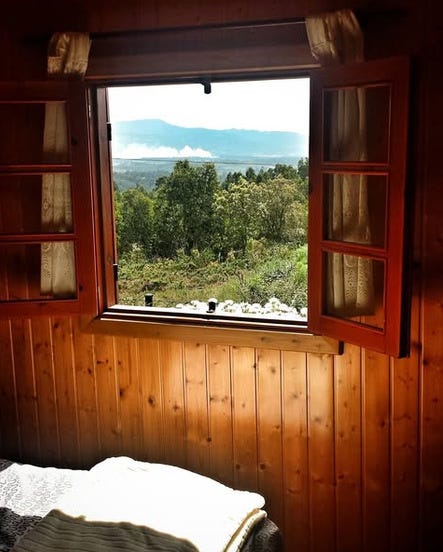
In my earliest days of travel writing, I had a terrible habit of failing to drink enough water when I visited hot places. I more or less got away with this for a few years, with the blithe, arrogant resilience of the young and truly clueless - but in the summer of 2016 it all caught up with me in an air-con-free wooden cabin in Portugal, during a 40°C/104°F heatwave.
I spent a week drinking maybe a litre and a half of water a day when I should have been glugging back four or five - and the result was heat exhaustion (the forerunner to heat stroke), lumbering me with a pounding headache that lasted two weeks, and damage to my internal thermostat that seemed to take years to heal - although I’m unconvinced I’ve ever fully recovered, since even mild dehydration instantly knocks me sideways these days.
If this newsletter helps someone else avoid the same fate, that would make me very happy indeed.
So! Deep breath, if you’re reading onwards. This is very much a scientific horror story. I hope that’s you warned.

Being alive is a remarkable balancing act between two cliff edges. When the temperature drops, we’ve only got a 10 degree margin of safety, a few paces backwards, before we’re feeling the icy touch of death.
But this leeway is luxurious compared with what happens when we start overheating. Here at our normal core body temperatures, at 37 degrees Celsius / 98.6 degrees Fahrenheit (or thereabouts), our toes are already poking over the edge of our very own heat-deaths.
Because right now, all that separates you and runaway thermal meltdown is...
3 degrees.
Let’s apply a little heat and see what happens.
37.8°C / 100°F
Maybe you’re in a nice warm room, and you’ve just had a big meal. You’ve got a bit of a glow on. This is because our bodies are amazingly efficient at converting food into heat - so much so that if left unchecked, your metabolism would push your core body temperature around 1.5° C higher every hour. Two hours and you’re approaching done.
But yet again, your hypothalamus is here to haul you out your own fire. As soon as you started straying above optimum temperature, it triggers two notoriously unloved bodily processes for venting heat. Your skin’s blood vessels dilate and blood rushes up and into them - and that blood is being pumped straight from the hot zone, so when it meets the coolness of the outside air, the unwanted heat is safely pushed out your body. That’s why a flushed face feels sizzling hot.
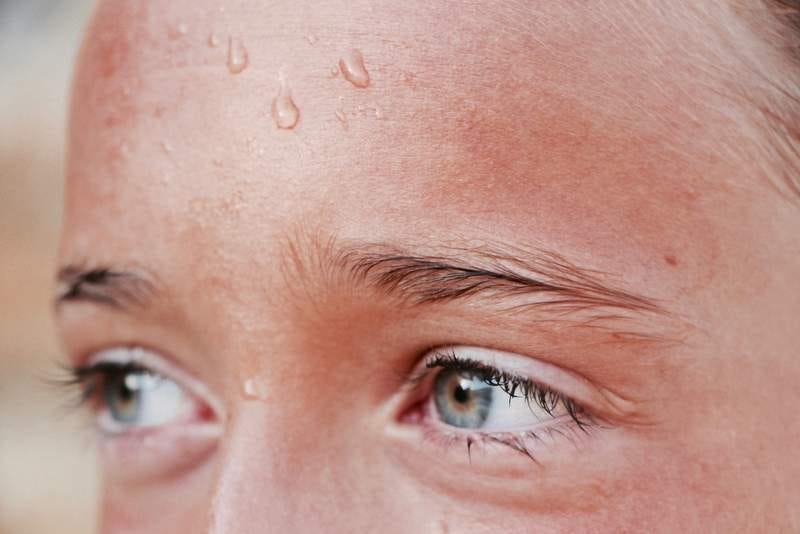
But far more embarrassing - and more marvellous - is when tiny glands all over your body start squirting out droplets of water mixed with sodium, potassium, calcium, magnesium and a host of trace minerals. You’re doused by your own sprinkler system, a warm liquid that immediately cools on contact with air (for “cools” read “transfers heat off the body and into the air”) and then evaporates, shifting remarkable amounts of heat in the process.
An amazing biological achievement - which of course we hate. Nothing like a big sweat patch to flag up to the world that you’re a repulsive dork, even though it’s actually a small sign that Darwin’s dice are rolling in your favour.
You pull your clammy shirt away from your body and fan it surreptitiously. Ugh - human beings are so gross.
38°C / 100.4°F
Maybe you’re newly arrived in an equatorial country you’ve never visited before. And maybe you’ve just tried to carry two suitcases up five flights of stairs in the height of summer. You’re in great shape, and under normal circumstances this physical feat would literally be no sweat.
But these aren’t normal circumstances.
As wonderful as the hypothalamus is, it’s not fitted with a GPS. It doesn’t know you’ve just arrived somewhere that’s on average 25 degrees warmer at this time of year, and at a different humidity than you’re used to. In fact, if your thermoregulatory system could be confused, it’d be thoroughly nonplussed by now. Why isn’t a mild sweat doing the job? Why isn’t turning you lobster-red achieving the required cooling results?
(Your hypothalamus also raises your temperature when you’re sick, to “cook the enemy” - this is a good overview from Andrew Smith.)
You’re suffering from a kind of thermal jetlag, and your body needs time to acclimatise. Until then, sorry: you’re going to sweat buckets. The floodgates are open.
This is a sensible and effective cooling mechanism in the short term (which also kicks in when you’re exercising, when your core temperature can briefly spike by as much as three degrees) - but you’ve got to do your bit to help it. You’re like a breached dam, losing massive amounts of fluids and salts, and if you don’t keep both of them topped up, you’re going to lose the fuel you need to keep you alive. So, lots and lots of water. Go nuts.
But remember, it’s not just the water here. You’re also going to need to replenish some of those body salts, mostly that sodium that’s crusting nicely in the wrinkles of your skin.
You know what you need?
Salty snacks.
Yes, it’s medically important that you eat a moderate amount of dry, pre-packaged snack food (which will even make you thirstier, making you drink even more water for your own good).
Oh, life is a struggle.
38.5°C / 101.3°F
Whoops. For your own good tragically foolish reasons, you’ve decided to sip a strong coffee instead.
It’s probably a myth that caffeine itself significantly dehydrates you (it can increase your rate of urination, but usually not enough to derail your fluid levels). However, a strong coffee will psychologically slake your thirst for a short while. This can turn out Very Bad Indeed. You’re sipping fluids when you should be drinking them.
Now you’re getting too hot, and it’s time to start your meltdown.
Your skin is painfully hot to the touch . . . but it’s drying up. This is because you simple can’t perspire enough, and your body heat is scorching away what little sweat you’re managing to squeeze out. Your lips feel swollen, and your face is a truly livid lick of scarlet.
With your blood so close to the surface of your skin, it’s losing its water due to evaporation - which means it’s thickening.
Thickened blood? Clotting.
Congrats! Your chances of suffering a stroke or a heart attack just spiked.
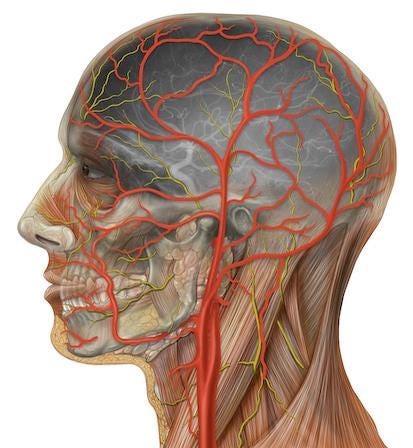
Please don’t go standing up suddenly. Your brain needs a regular blood supply - around 15% of your cardiac output. With so much blood currently diverted elsewhere, your blood pressure is dropping and not enough is being pumped up to your head, making you woozy, nauseous and unable to stand without waves of dizziness.
You’re becoming severely hyperthermic - the warm-blooded twin of hypothermia.
You’re understandably terrified right now.
But don’t worry, the fear will pass soon - because you won’t be conscious for much longer.
39.5°C / 103.1°F
You’re scared and in pain. Your breathing and your pulse are both racing. You’re also yawning convulsively. Your brain is in trouble, and it’s forcing you to suck in cool air and the oxygen you need to keep conscious in your elevated metabolic state.
Are your surroundings helping or hindering your last-ditch attempts to save yourself? If the air around you is almost as warm as you are, your sweat can’t evaporate...which is why heat exhaustion is such a danger in high-humidity (75%+) environments, especially to non-acclimatised new arrivals.
At this stage, you might be panicking. Hopefully you’re knocking back as much water as you can - and it’d be great if you kept snacking too. Dilute your body’s salt-water mixture too much and you’ll be hit with a bout of hyponatremia. Symptoms? Same as those from heat exhaustion - except with the rollercoaster thrill of possible brain swelling.
It could well be that the only thing between you and a coma right now is half a tube of Pringles.
40°C / 104°F
Welcome to the death zone.
If you’re still conscious at this temperature, your awareness is severely impaired. You’re almost certainly not going to do the right thing - and the right thing is to get your temperature down as quick as possible, because you’re starting to die.
Beyond 40 degrees Celsius, you’re into heat stroke.
This is ugly. Your hypothalamus can’t do anything. Your core body temperature is rising, your natural thermoregulatory functions can’t do a damn thing to stop it, and your body tissues are suffering permanent damage as a result.
Your one and only hope right now is for medical services to arrive and cool you with specialist equipment.
If well-meaning samaritans lay wet towels on your skin, it’s probably only going to be a few seconds before the damp material warms and becomes an insulator.
Fans blowing cooler air, periodically-applied cold compresses, water and a little salt. . . this is how passers-by can keep you alive until professional help arrives.
But you can’t tell them that because you’re now unconscious, just minutes from a coma.
Heat stroke isn’t necessarily fatal, if treated swiftly and skilfully.
But even if help arrives in time and your temperature is brought down to safe levels, it could be months before it’s known how much damage has been dealt to your organs.
42°C / 107.6°F
Your last shot at salvation is now gone. You’re boiling in your own skin.
Here’s how. Your body temperature is so elevated that the proteins in your cells are cooking - as Alok Jha puts it, “like egg white as it boils”. Muscles are starting to lock up - including the ones that allow you to keep breathing. Your thickened, low-pressure blood supply can’t reach your brain...
Your brain, the nerve centre of your body, shuts down.
Game over.
Further reading:
“Boiled Alive“ - Alok Jha, The Guardian, 26th July 2006.
“Avoiding Heat Illness“ - Dr. Gary F. Arnet, Backwoods Home Magazine.
“After Heatstroke, When Is It Safe To Exercise?“ - Gina Kolata, New York Times, 14th June 2010.
“Heatstroke“ - Robert S. Helman M.D., eMedicine.
“‘Non-survivable’: heatwaves are already breaching human limits, with worse to come, study finds” - Graham Readfearn, The Guardian.
The incredible first chapter of Kim Stanley Robinson’s The Ministry For The Future (2021), which hammers home better than anything else I’ve read the urgent need to start preparing for extreme temperature events.
Images: Alexander Grey, Hans Reniers, 96dpi, Patrick J. Lynch and Kansas Poetry (Patrick).
Madrid needs to do now what Sevilla did to deal with heat. Can’t narrow streets but could make some pedestrian only and plant big umbrella shade trees.
"I certainly don’t have to check this magnificent ‘weather station’ at the edge of my local golf course to know it’s really, really warm in Scotland right now..."
1. How much does the heat affect your game and what are you doing to adjust?
2. Will "it's-too-hot-to-golf" become a thing and impact the the future of golf (Drive Shack)?
3. Why don't they talk about the heat more when announcing golf?
4. What's your handicap?